
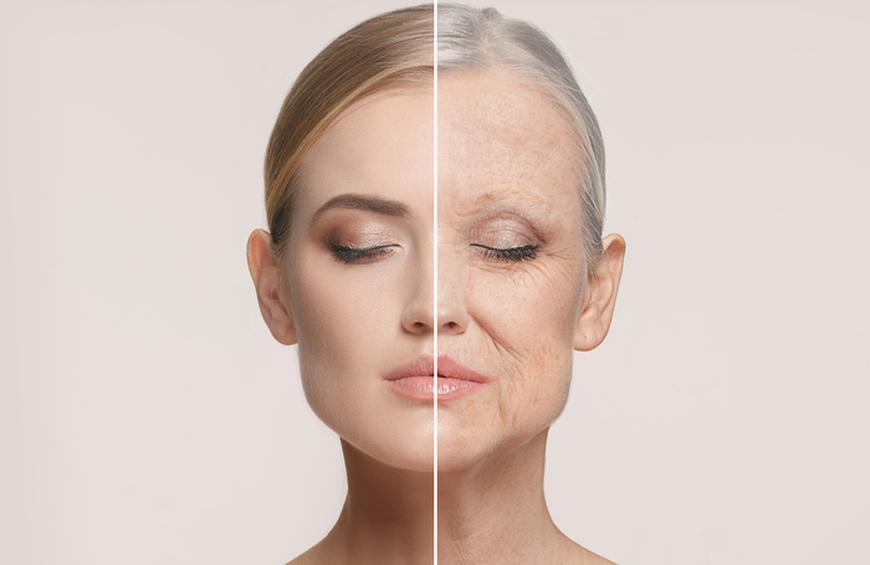
23 Mar Sun protection factor for every skin type | SPF
A common myth that is repeated in the world of skin care is that SPF should be used only during the summer. It’s true that in the warmer months we are more exposed to the sun’s rays, so a high protection factor is needed to protect the exposed parts of the skin. When you think about it, your hands, face and neck are exposed to the sun all year round. The question is – how dangerous is the sun in the remaining months? How high protection factor do we need and when? Find all the answers to the questions, as well as the recommendations of excellent SPF creams below!
Do we need sun protection factor all year round?
We will first refute the myth that a protective factor should be used only in summer. Because UV rays are present all year round and cause damage to the skin even though we may not feel these changes. The sun’s rays are strong enough to break through the darkest clouds, so don’t be fooled that we don’t need sun protection. On the contrary – before going out, apply your favorite SPF to prevent accelerated skin aging. Even during the coldest winter months, snow reflects the sun’s rays, so you need to be careful!
Most will agree that a tanned complexion looks healthy and our skin tighter – but you should pay attention to the strength of the sun and to the chosen protective factor as well as how often to apply it. By using SPF, the skin will gradually darken and be protected from harmful UV rays. If you are not yet convinced, consider the fact that UV rays destroy skin cells, accelerate skin aging, cause pigmentation spots and can lead to skin cancer.
How to choose sun protection factor?
From many products on the market, it’s difficult to find SPF cream that will fit your skin perfectly. Fortunately, there are dermatologists who can recommend an ideal cream with a protective factor depending on the skin type. The most important item when choosing an SPF cream is protection against UVA and UVB rays, and to offer a wide range of protection. UVA rays are the first to penetrate deep into the skin and cause pigmentation spots, wrinkles, freckles, cracked capillaries on the surface of the skin and similar. The name UVA itself means ultraviolet aging. They destroy collagen, which makes the skin youthful and supple.
UVB rays cause burns and are the main culprit of skin tumors, as the name suggests – ultraviolet burn. For these reasons, it’s necessary to pay attention to the time spent in the sun, taking into account the chosen protective factor. To simplify, the written protection factor tells us how many minutes we can spend exposed to the sun’s rays, and re-apply it when necessary. If you have chosen a protection factor of 30 (SPF 30), that would mean 300 minutes without sunburn – the higher the protection factor, the greater the protection.
SPF and skin types
You can find various SPF creams on the market, but we always recommend a visit to a dermatologist who will be able to tell you exactly what your skin needs – especially in the months when you think sun protection is not necessary at all. These are just some of the tried and tested products that work and do not leave white marks after application. Also, most of us do not like that heavy feeling on the face, especially in the summer when makeup is kept to a minimum, so we suggest some of the products below.
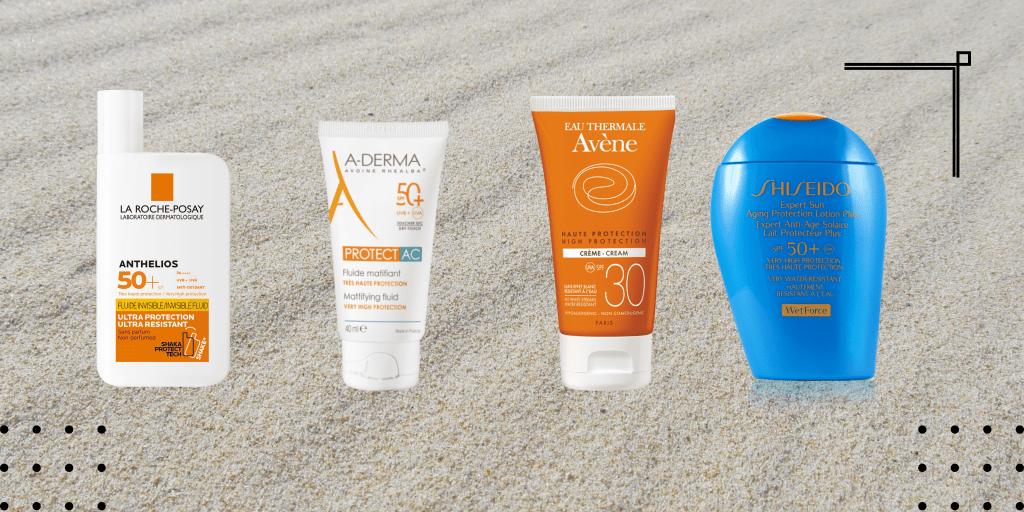
Sensitive skin – La Roche-Posay Anthelios SPF 50+
La Roche-Posay cosmetics are highly praised by women with sensitive skin, precisely because the products are light in texture, don’t cause skin reactions, are gentle and effective. La Roche-Posay Anthelios SPF 50+ is a waterproof cream with a high protection factor formulated for sensitive skin. The cream does not contain perfumes or parabens, but helps with overproduction of sebum and lightly mattifies the skin. It’s recommended by various dermatologists, because it protects against UV radiation very successfully.
Combination skin – A-Derma SPF 50+
A-Derma sunscreen cream is recommended for people with combination skin, especially people whose skin is prone to atopy. Atopic dermatitis is a chronic inflammation of the upper layers of the skin with itching. The cream is recommended for babies, children and adults because it is enriched with oat oil which strengthens the skin barrier and protects from UV rays. It’s also a broad-spectrum SPF so you don’t have to worry about burns or deep skin damage.
Avene SPF 30
For problem skin, prone to acne Avene has a special paraben-free formula with vitamin E which is a powerful antioxidant and protects the skin from free radicals. It’s also enriched with Avene thermal water for a calming effect. It has a light texture, with a mattifying effect and is ideal for hypersensitive skin prone to inflammatory processes.
Dry skin – Shiseido 50+
The formula enriched with a complex of golden oyster mushrooms, provides protection and hydration of dry skin, while combating damage from various environmental factors. Restores skin moisture and suppleness and gives it a healthy glow. Shiseido cream with a protective factor is a revelation for dry skin.
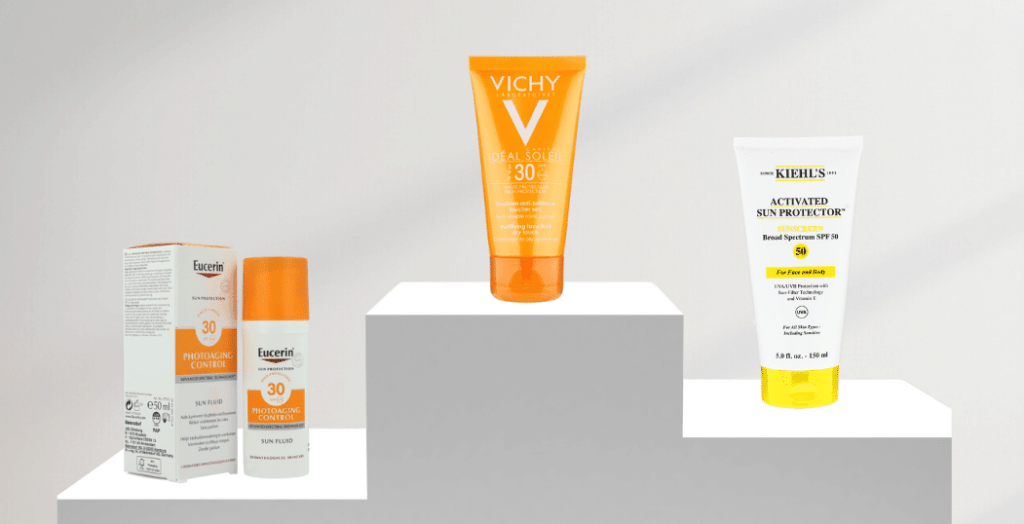
Normal skin and SPF
For normal to combination skin, choose one of the following sunscreens.
- Vichy SPF 30
- Eucerin sensitve protect Anti-age 30
- Kiehls activated sun protector SPF 50
As for SPF creams from drugstores, there are excellent products that also protect the skin from the harmful effects of UV rays. Some of the tested ones are Garnier SPF 50+ which is formulated for all skin types, does not leave white marks, and gives the skin radiance. For a stronger effect, try Neutrogena SPF 70+, which is waterproof, absorbs quickly and does not leave a feeling of heaviness on the face.
How to combine makeup and SPF?
With the warmer days approaching, we suggest you pay more attention to skin protection, and keep your makeup very light and airy. If you have a skincare routine that suits your skin, after your favorite moisturizer, apply SPF, then makeup – if you intend to use it.
Protect your skin, becasue that will make it look healthy, radiant and youthful.